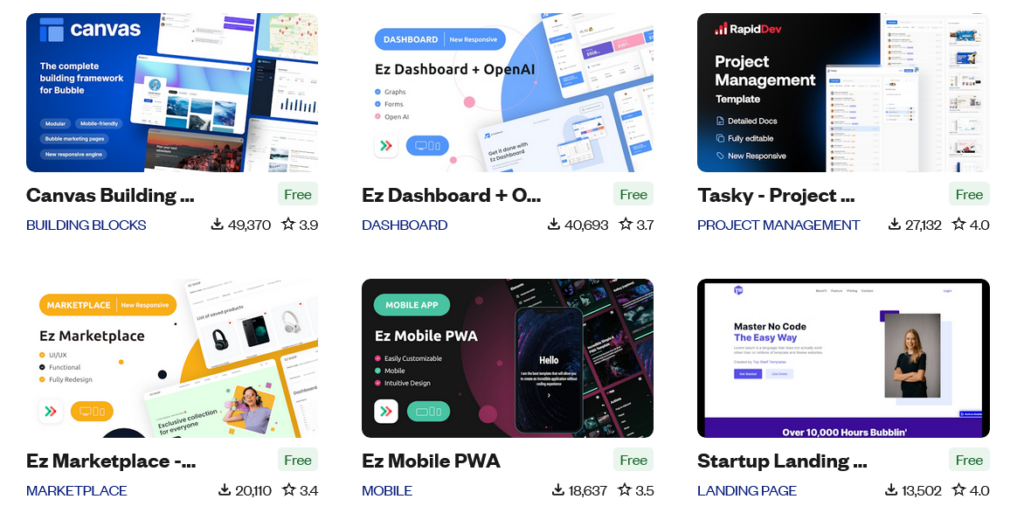
Bubble is a leading no-code SaaS (Software as a Service) platform that enables users to design, develop, and launch their own web applications without any coding knowledge. It offers a visual programming interface for creating dynamic, responsive web apps complete with a built-in database, workflows for automating processes, and API integrations for connecting with other services. Bubble's extensive plugin system further enhances its capabilities, allowing for the addition of numerous functionalities. Aimed at democratizing software development, Bubble makes app creation accessible to entrepreneurs, designers, and businesses of all sizes, facilitating rapid prototyping, testing, and deployment of web applications. This powerful platform combines ease of use with scalability, supporting applications as they grow, making it an affordable and efficient solution for bringing digital ideas to life.
Pros
No coding required
Intuitive visual programming language
Helpful tutorials
Cons
Lack of coding may ultimately limit usefulness
Can get expensive quickly
In the rapidly evolving landscape of software as a service (SaaS), Bubble stands out as a revolutionary platform that is changing the way individuals and businesses build web applications. As a no-code development platform, Bubble empowers users with the ability to create complex, highly functional web applications without the need for traditional coding skills. This comprehensive article explores the essence of Bubble, its core features, benefits, and the impact it has on the democratization of web development.
1. What is Bubble?
Bubble is a powerful no-code SaaS platform that enables users to design, develop, and launch fully customizable web applications and digital products. From simple prototypes to complex SaaS platforms, marketplaces, and social networks, Bubble provides a comprehensive set of tools that cater to the diverse needs of its users. The platform’s visual programming interface allows for the intuitive creation of web applications, making web development accessible to a broader audience beyond professional developers.
Core Features of Bubble
Visual Programming Interface: Bubble’s drag-and-drop editor allows users to visually design their application’s user interface and define its logic through workflow configurations, eliminating the need for writing code.
Customizable Templates: To accelerate the development process, Bubble offers a range of customizable templates designed for various types of applications, from e-commerce sites to social networks.
Dynamic Content and Data Management: With its built-in database, Bubble enables users to create, store, and manipulate dynamic content and user-generated data, facilitating the development of complex applications.
API Integration: Bubble supports integration with external services and APIs, allowing users to extend the functionality of their applications by connecting to third-party tools and platforms.
Responsive Design: Applications built on Bubble are inherently responsive, ensuring that they perform seamlessly across different devices and screen sizes.
Hosting and Security: Bubble not only provides a platform for building web applications but also offers hosting services. It implements robust security measures to protect user data and ensure application reliability.
Benefits of Using Bubble
Accessibility: By removing the technical barriers to web development, Bubble makes it possible for non-technical users, such as entrepreneurs, designers, and small business owners, to bring their digital ideas to life.
Speed and Efficiency: The no-code approach significantly reduces the time and resources required to develop and deploy web applications, allowing for rapid prototyping and faster time to market.
Flexibility and Scalability: Bubble’s flexible design and powerful backend capabilities enable the creation of scalable applications that can grow with the user’s needs, from MVPs to full-fledged products.
Cost-Effectiveness: With Bubble, the need for a large development team is diminished, making it a cost-effective solution for startups and small businesses looking to minimize their initial investment in technology.
The Impact of Bubble on Web Development
Bubble is at the forefront of the no-code movement, a trend that is democratizing technology creation and empowering a new wave of makers. By simplifying the development process, Bubble is opening up opportunities for innovation and entrepreneurship, enabling more people to turn their ideas into reality without the limitations of traditional coding skills. This shift is not only expanding the digital economy but also fostering a more inclusive environment where anyone with a vision can participate in the creation of web-based solutions.
2. World of Bubble: Unleashing Creativity with No-Code Development
In the innovative landscape of no-code platforms, Bubble stands out as a powerful tool that democratizes the ability to create sophisticated web applications. With its intuitive drag-and-drop interface and comprehensive suite of features, Bubble enables entrepreneurs, designers, and businesses to turn their visions into reality without the need for extensive coding knowledge. This article explores the vast possibilities of what you can create with Bubble SaaS, illustrating the platform’s versatility and its transformative impact on digital development.
Dynamic Web Applications
Bubble’s core strength lies in its capacity to build dynamic, data-driven web applications. Users can design complex user interfaces, manage databases, and set up workflows to automate processes. This capability is particularly beneficial for creating custom CRM systems, project management tools, or any application that requires user input and data manipulation, offering personalized experiences to each user based on their interactions and preferences.
E-Commerce Platforms
E-commerce is another area where Bubble excels. The platform supports the development of fully functional e-commerce sites complete with product listings, shopping carts, and secure checkout processes. Bubble integrates with payment gateways like Stripe and PayPal, making transactions smooth and secure. Additionally, its flexibility allows for the integration of advanced features such as inventory management, customer reviews, and personalized product recommendations, providing a comprehensive solution for online retailers.
Marketplaces
With Bubble, creating a marketplace that connects buyers with sellers or facilitates peer-to-peer exchanges becomes significantly easier. Whether it’s for goods, services, or digital products, Bubble’s capabilities allow for the development of platforms similar to eBay, Etsy, or Fiverr. Features like user accounts, messaging systems, and payment processing are readily implementable, enabling entrepreneurs to launch their marketplaces with minimal hassle.
Social Networks
Bubble’s versatility extends to social networking, where developers can build platforms for community engagement, content sharing, and networking. Customizable user profiles, news feeds, and interaction features like comments, likes, and shares can be seamlessly integrated, making it possible to create niche social networks or community-driven sites that cater to specific interests or industries.
Educational Platforms and Online Courses
Educational technology is another field ripe for innovation with Bubble. The platform can be used to create online learning platforms, course management systems, or educational games. Features such as video embedding, quizzes, progress tracking, and certification issuance are all within reach, allowing educators and entrepreneurs to build engaging and interactive learning experiences.
Personal Blogs and Portfolios
For individuals looking to showcase their work or share their thoughts, Bubble provides the tools to create personal blogs or portfolio websites. Unlike traditional website builders, Bubble offers more flexibility and interactivity, enabling creators to design unique layouts, integrate multimedia content, and even add custom functionalities like contact forms or booking systems.
Prototyping and MVP Development
Startups and entrepreneurs often turn to Bubble for prototyping and minimum viable product (MVP) development. The platform’s speed and ease of use make it ideal for testing business ideas and iterating on feedback without investing heavily in custom software development. This approach can significantly accelerate the product-market fit process and reduce time to market.
The possibilities with Bubble are as limitless as the imagination of its users. By breaking down the barriers to web development, Bubble opens up a world of opportunity for creating digital products and services. Whether you’re looking to launch a startup, grow your business, or simply bring an idea to life, Bubble’s no-code platform empowers you to do so with creativity, efficiency, and minimal technical overhead. In the era of no-code development, Bubble stands as a beacon for innovators and creators, proving that the future of digital creation is inclusive, accessible, and boundless.
3. No-Code Development with Bubble
In the rapidly evolving digital landscape, the demand for quick and efficient web application development has never been higher. Enter Bubble SaaS, a revolutionary no-code platform that is transforming the way entrepreneurs, businesses, and enthusiasts approach app development. By offering an accessible, versatile, and powerful toolset, Bubble empowers users to bring their innovative ideas to life without needing to write a single line of code. This article explores the journey of developing on Bubble, highlighting its key features, benefits, and how it stands as a beacon for those looking to dive into the world of no-code development.
The Foundations of Bubble
Bubble is built on the principle that software development should be accessible to everyone, not just those with technical backgrounds. It achieves this through a visual programming interface that allows users to design, customize, and launch web applications through simple drag-and-drop actions. This no-code approach democratizes app creation, opening up opportunities for a wider range of people to participate in digital innovation.
Key Features for Comprehensive Development
Visual Editor: Bubble’s intuitive visual editor lets users design their app’s interface by dragging elements onto a canvas. This feature supports the creation of responsive designs that look great on any device.
Workflow Design: At the heart of Bubble’s functionality is the ability to design workflows that define the logic of the application. Users can create sequences of actions triggered by user interactions, making complex processes simple.
Built-in Database: Bubble comes with a built-in database, making it easy to create, store, and manipulate data. This feature is crucial for developing dynamic applications that require real-time data updates.
API Integration: For applications that need to communicate with other services, Bubble supports API integrations. This allows developers to connect their apps with external software, expanding their capabilities.
Plugin System: Through its extensive plugin system, Bubble offers additional functionalities developed both by the Bubble team and the wider community. From payment processing to analytics, plugins can significantly extend an app’s features.
The Advantages of Developing on Bubble
Speed and Efficiency: Bubble significantly reduces the time from concept to launch, allowing developers to iterate quickly based on user feedback.
Cost-Effectiveness: By eliminating the need for extensive coding, Bubble reduces the cost associated with hiring a development team, making it an affordable option for startups and small businesses.
Scalability: Bubble’s infrastructure is designed to scale, supporting applications as they grow in users and functionality. This ensures that apps built on Bubble can evolve to meet increasing demands.
Community and Support: Bubble has a vibrant community of developers and enthusiasts who share knowledge, offer support, and create resources that help others succeed on the platform.
Realizing Ideas with Bubble
Developing on Bubble SaaS opens up a world of possibilities. Entrepreneurs can test business ideas with minimal upfront investment, educators can create interactive learning platforms, and creatives can build portfolios or interactive projects that showcase their work. The platform’s flexibility means that whether you’re looking to build a marketplace, a social network, a project management tool, or any other web application, Bubble provides the tools necessary to realize your vision.
Bubble’s no-code platform is a game-changer in the world of web development, breaking down barriers and making the digital space more accessible. By offering an intuitive, powerful, and scalable solution, Bubble empowers users to create sophisticated web applications, regardless of their technical expertise. As the digital economy continues to grow, platforms like Bubble will play a crucial role in enabling the next wave of innovation, driven by a diverse community of developers and dreamers ready to bring their ideas to life.
4. Costs of Developing an App on Bubble
In the era of digital transformation, creating an app can be a gateway to innovation, offering solutions, enhancing customer engagement, and opening new business avenues. Bubble’s no-code SaaS platform has emerged as a game-changer in this domain, democratizing app development by allowing users without extensive technical knowledge to bring their ideas to life. However, a common query among aspiring app creators is the cost associated with developing an app on Bubble. This article delves into the various factors that influence the cost of app development on Bubble, providing insights into budgeting and planning for your project.
Understanding Bubble’s Pricing Structure
Bubble offers a tiered pricing model, designed to cater to a wide range of needs, from individual hobbyists to large enterprises. The pricing tiers start with a free plan, which is great for learning and prototyping, and scale up to professional and production plans that offer advanced features, higher capacity, and dedicated support. The key to understanding the cost implications lies in comprehensively assessing your app’s requirements against the features provided by each plan.
Factors Influencing Development Costs on Bubble
Subscription Plan: The chosen Bubble subscription plan forms the base cost of developing your app. Plans vary in features, such as the number of app editors, server capacity, and access to advanced features like API connections. Higher-tier plans, while more costly, offer greater flexibility and scalability for your app.
Custom Domain: While Bubble provides a bubbleapps.io domain, a custom domain is essential for branding and credibility. The cost of acquiring and maintaining a custom domain varies depending on the registrar and the domain extension chosen.
Third-party Integrations and Plugins: Although Bubble’s native functionality is extensive, specific app requirements may necessitate third-party plugins or services, which can add to the overall cost. The marketplace offers both free and paid plugins, and external services may have their subscription fees.
Design Assets: While Bubble offers design flexibility, professional-looking apps often require custom design assets, such as icons, illustrations, and images. Depending on the source, these assets can either be free or require licensing fees.
Development Time: Although Bubble significantly reduces development time, complex projects may still require considerable effort. If you’re hiring a Bubble developer or agency, their fees—based on experience, project complexity, and timeline—will contribute to the overall cost.
Maintenance and Scaling: Post-launch, apps require ongoing maintenance and updates. As your app grows, scaling up server capacity or adding features to accommodate increased user traffic or data processing needs can impact costs.
Estimating Your Bubble App Development Cost
Given the factors above, the cost of developing an app on Bubble can vary widely. A simple app developed on a basic plan with minimal custom assets and plugins might only incur the subscription fee. In contrast, a complex app requiring a higher-tier plan, multiple paid plugins, custom design work, and professional development assistance can cost significantly more.
To estimate your development cost:
Define Your App’s Scope: Clearly outline the functionalities, features, and design requirements.
Choose the Right Plan: Select a Bubble plan that aligns with your app’s needs, considering future scalability.
Budget for Extras: Account for the costs of third-party plugins, custom domains, and design assets.
Consider Development Support: If you’re planning to hire help, get quotes from Bubble developers or agencies for a clearer cost picture.
Developing an app on Bubble offers a flexible and cost-effective route to digital innovation. While the platform’s no-code approach significantly reduces traditional development costs, careful planning and consideration of the factors outlined above are essential to accurately budget for your project. By leveraging Bubble’s scalability and the wealth of resources available, entrepreneurs and businesses can create powerful apps that drive growth and engagement, all within a manageable budget framework.
5. Conclusion
Bubble’s no-code SaaS platform is redefining the paradigms of web development, making it more accessible, efficient, and inclusive. Its comprehensive suite of features, combined with the benefits of no-code development, positions Bubble as a game-changer for individuals and businesses looking to create web applications. As the platform continues to evolve and expand its capabilities, Bubble is set to play a pivotal role in shaping the future of web development, where the power to build is in the hands of many, not just a few.