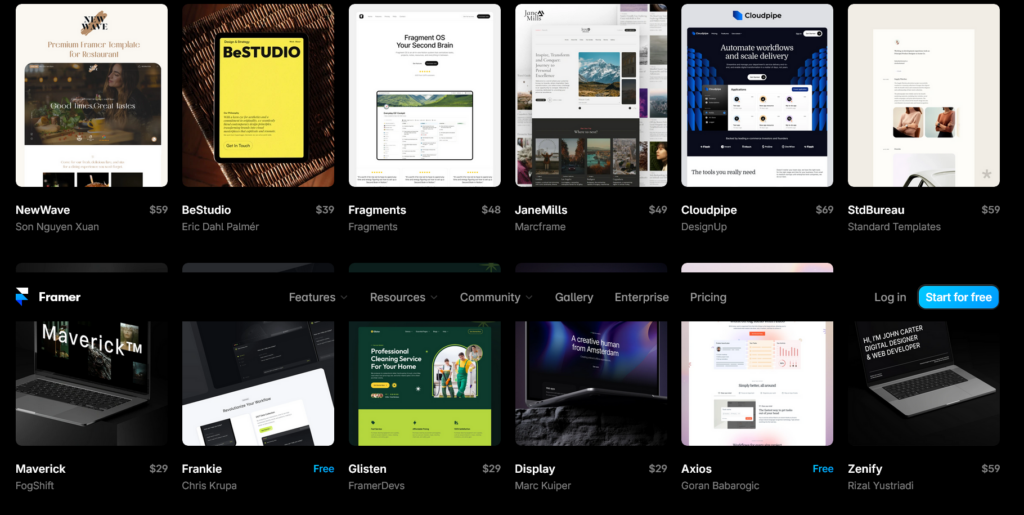
Framer is a platform designed to transform your approach to website construction. Utilizing the capabilities of artificial intelligence, Framer enables you to create and launch fully responsive websites effortlessly, all without the need to code.
Pros
AI-Driven Design
User-Friendly Interface
Comprehensive Features
Pricing Options
Cons
Learning Curve
Limited Free Plan
In the burgeoning landscape of no-code development platforms, Framer has carved out a niche for itself as a powerful tool aimed at revolutionizing the way designers and developers create interactive web and mobile applications. As a SaaS (Software as a Service) platform, Framer combines the flexibility of visual design with the functionality of high-fidelity prototyping, making it a standout choice for professionals looking to streamline their workflow. This review delves into the features, usability, and overall impact of Framer on the design and development process.
1. Intuitive Design Meets Powerful Prototyping
At its core, Framer is designed to bridge the gap between static design and dynamic interaction, enabling users to transform their visual concepts into interactive prototypes without writing code. The platform’s intuitive drag-and-drop interface allows for the seamless creation of layouts, while its comprehensive toolkit supports everything from basic animations to complex interactions.
Key Features of Framer
Visual Design Tools: Framer’s robust design toolkit enables users to create detailed designs directly within the platform, offering extensive control over layout, typography, color, and more.
Interactive Prototyping: What sets Framer apart is its ability to prototype interactions and animations, making it possible to create realistic user experiences that can be tested and iterated upon.
Collaboration and Sharing: Framer emphasizes collaboration, providing teams with the ability to work on projects simultaneously, share prototypes with stakeholders, and gather feedback in real-time.
Integration and Expansion: The platform supports integration with popular design tools like Figma, Sketch, and Photoshop, allowing users to import and enhance existing designs. Additionally, Framer’s extensive library of modules and an active community contribute to its expandability.
2. Redefining Website Building with Comprehensive Features and Integration
In the rapidly evolving digital landscape, Framer emerges as a powerful website builder SaaS, distinguished by its innovative features, seamless site management capabilities, and comprehensive design tools. Designed to cater to both designers and developers, Framer offers an array of functionalities from SEO optimization to native e-commerce features, setting a new standard in the realm of website construction and management. This article delves into the rich tapestry of Framer’s offerings, highlighting how its features and integrations, such as the Figma plugin, position it uniquely among contemporaries like Webflow and Typedream.
Leveraging Powerful Website Building Tools
Framer is equipped with a suite of powerful website building tools that empower users to create, design, and launch sophisticated websites without the need for extensive coding knowledge. Its design tools are intuitive, allowing for the crafting of visually appealing layouts, while the inclusion of custom code capabilities ensures that developers can fine-tune functionality to their precise requirements.
Streamlined Site Management with Framer
At the core of Framer’s appeal is its comprehensive suite of site management tools. Users can effortlessly navigate the complexities of website administration, from updating content to monitoring site performance. Framer’s content management tools are designed to be user-friendly, ensuring that keeping your site’s content fresh and engaging is a hassle-free process.
Expanding Functionality with Plugins and Integrations
Framer stands out for its open ecosystem, supporting a variety of plugins and integrations that extend its functionality. Notably, the Figma plugin allows designers to import their designs directly into Framer, bridging the gap between design conception and website implementation. This seamless integration underscores Framer’s commitment to streamlining the design process and fostering collaboration between team members.
SEO Optimization and Powerful SEO Tools
Understanding the importance of search engine visibility, Framer includes advanced SEO tools and optimization features, enabling users to enhance their site’s ranking and drive organic traffic. From meta tags to structured data, Framer provides all the necessary tools to ensure that websites are optimized for search engines, making it easier for potential customers to discover your site.
Embracing E-commerce with Comprehensive Features
Recognizing the growing demand for online shopping solutions, Framer incorporates native e-commerce features, allowing users to build fully functional online stores. These e-commerce features are complemented by robust site management tools, facilitating the handling of products, orders, and customer interactions. Whether you’re a small startup or an established business looking to expand online, Framer offers the e-commerce capabilities you need to succeed in the digital marketplace.
Innovative Design with Framer
Framer’s innovative design framer tools encourage creativity and experimentation, enabling users to create unique and interactive websites. The platform’s comprehensive features Framer supports a wide range of design elements, from animations to dynamic content, ensuring that every website built on Framer is not only functional but also visually captivating.
Framer SaaS redefines the landscape of website building and management through its powerful website builder, comprehensive design tools, and native e-commerce features. Its innovative features, combined with seamless site management tools and SEO optimization capabilities, make Framer an all-encompassing platform for creating, launching, and managing websites. Whether integrating designs from Figma or leveraging its e-commerce functionalities, Framer provides a versatile and user-friendly environment for businesses and creatives alike to bring their digital visions to life. As the digital space becomes increasingly competitive, Framer’s holistic approach to website development ensures that users have everything they need to stand out and succeed online.
Usability and Learning Curve
Framer’s comprehensive feature set does come with a learning curve, particularly for those new to interactive prototyping. However, the platform offers a wealth of resources, including tutorials, documentation, and community forums, to help users get up to speed. Once familiar with the tools, users can quickly leverage Framer’s capabilities to accelerate the design and prototyping process.
Impact on the Design and Development Process
Framer’s impact on the workflow of designers and developers is significant. By allowing for the rapid creation and testing of interactive prototypes, it enables teams to iterate more efficiently and arrive at polished, user-tested solutions faster. This can greatly reduce development time and ensure that the final product closely aligns with the envisioned user experience.
3. Website Design and Creation with Framer
In the competitive landscape of the website building arena, Framer SaaS emerges as a transformative force, redefining the paradigms of website creation and design. This innovative platform caters to a broad spectrum of website creation needs, from crafting personal sites to developing real responsive websites for businesses. Framer SaaS distinguishes itself by streamlining the website design process, enabling both novices and seasoned professionals to bring their digital visions to life with ease and precision.
Website Creation with Framer
At the heart of Framer SaaS lies a robust website building tool that democratizes web design, making it accessible to individuals with varying levels of expertise. The platform’s intuitive interface and advanced features simplify the website creation process, allowing users to focus on the aesthetic and functional aspects of their sites without getting bogged down by complex coding requirements.
Crafting Real Responsive Websites
In today’s digital age, creating real responsive websites that adapt seamlessly across devices is not just an advantage; it’s a necessity. Framer SaaS excels in this domain, offering a suite of design tools that ensure websites look impeccable on desktops, tablets, and smartphones alike. This responsiveness enhances user experience and engagement, a critical factor in achieving online success.
Personalizing the Website Design Process
Framer SaaS stands out for its versatility in meeting various website creation needs, especially when it comes to designing personal sites. The platform empowers users to infuse their unique identity into their projects, offering customizable templates and interactive elements that reflect their personal brand or story. This personalization capability enriches the website design process, enabling creators to produce sites that resonate with their audience.
Streamlining the Website Creation Process
One of the most daunting aspects of website creation is the perceived complexity of turning a concept into a fully functional site. Framer SaaS simplifies this journey with its user-friendly website building tool, guiding users through each step of the design and development process. From layout conception to the integration of dynamic content, Framer SaaS ensures a smooth transition from idea to online presence.
Meeting Diverse Website Creation Needs
Framer SaaS’s flexibility extends beyond personal projects, accommodating a wide range of website creation needs. Whether it’s for portfolio showcases, e-commerce platforms, or corporate websites, Framer SaaS delivers comprehensive solutions that cater to the diverse demands of the website building community. This adaptability makes Framer SaaS a preferred choice in the website building arena, enabling users to craft sites that not only meet but exceed expectations.
Framer SaaS revolutionizes the website design and creation process, offering an unparalleled blend of ease, flexibility, and power. By demystifying the complexities of web design and enabling the creation of real responsive websites, Framer SaaS positions itself as a pivotal tool in the digital creator’s arsenal. Whether for personal sites or large-scale projects, Framer SaaS meets a myriad of website creation needs, embodying the future of website building and design. As we look towards an increasingly digital future, Framer SaaS stands ready to empower creators and businesses to establish their online presence with confidence and creativity.
4. Pricing and Accessibility
Framer offers various pricing tiers, including a free version with basic features and paid subscriptions that unlock more advanced capabilities. This pricing structure makes Framer accessible to freelancers, startups, and large enterprises alike, ensuring that teams of all sizes can benefit from its prototyping and design solutions.
Tailored Plans for Every Stage of Development
Framer, a pioneering no-code SaaS platform, has established itself as an indispensable tool in the world of web and mobile application design and prototyping. Catering to a wide audience, from individual designers to large enterprises, Framer offers a variety of pricing plans to ensure every user can find a solution that fits their needs. This article explores Framer’s diverse range of plans, from a limited free option to comprehensive business packages, highlighting how each caters to different stages of development and budget constraints.
Navigating Framer’s Pricing Plans
Framer’s approach to pricing is designed to accommodate the varied requirements of its user base, offering everything from basic access for individuals exploring the platform to full-fledged business plans for professional teams requiring advanced features and collaboration tools.
Limited Free Plan: Framer’s free plan is an excellent starting point for individuals new to the platform. It allows users to experiment with the basic functionalities of Framer, offering a taste of its design and prototyping capabilities. While access to more advanced features is restricted, the free plan is a valuable resource for learning and small-scale projects.
Mini Plan: The Mini Plan is a step up from the free version, designed for hobbyists or freelancers who need access to more features but are not yet ready to commit to a higher-tier plan. This plan typically includes more projects and pages than the free plan, making it a suitable choice for users with modest needs looking to explore Framer’s capabilities further.
Basic Plan: Targeted at individual professionals and small teams, the Basic Plan offers a balanced mix of features at an affordable price point. Users can enjoy increased project limits and access to essential collaboration tools, making it easier to manage personal projects or small-scale professional applications.
Pro Plan: The Pro Plan is tailored for seasoned designers and medium-sized teams requiring advanced functionality and increased collaboration. With access to premium features, more extensive project limits, and team collaboration tools, the Pro Plan is ideal for users looking to leverage Framer’s full potential in more complex projects.
Business Plan: At the top of Framer’s offering is the Business Plan, designed for large organizations and enterprises. This plan includes unlimited projects, advanced security features, priority support, and customized collaboration options to fit the needs of large teams working on extensive and intricate applications.
Understanding Pricing Options
Framer’s pricing structure is transparent and flexible, allowing users to select monthly or annual billing, with significant savings available for those who choose the latter. Each plan is crafted to ensure users only pay for the features they need, making Framer a cost-effective solution for a wide range of projects, from personal portfolios to enterprise-grade applications.
Free vs. Paid Sites
A key consideration when choosing between Framer’s plans is the distinction between free and paid sites. Paid plans offer enhanced features, such as custom domain hosting, advanced SEO tools, and higher bandwidth limits, which are crucial for professional or business-oriented projects. Free plans, while limited, still provide a robust platform for learning and experimentation, allowing users to create and share projects within the Framer community.
Framer’s diverse pricing plans reflect the platform’s commitment to making no-code development accessible to a broad audience. Whether you’re an individual starting out, a professional looking to refine your skills, or a business in need of comprehensive design and prototyping tools, Framer offers a plan tailored to your needs. By carefully considering the pricing options and the features each plan provides, users can make an informed decision that best supports their development journey, ensuring that Framer remains a versatile and valuable tool in the creation of dynamic web and mobile applications.
5. Conclusion
Framer stands out as a powerful no-code SaaS platform that empowers designers and developers to bring their interactive prototypes to life with ease. Its blend of intuitive design tools and advanced prototyping capabilities make it a valuable asset in the creation of engaging web and mobile applications. While there is a learning curve, the platform’s potential to streamline the design and development process, coupled with its collaborative features and expansive ecosystem, make Framer a compelling choice for professionals seeking to elevate their workflow. As the demand for interactive and user-centered design continues to grow, Framer is well-positioned to remain at the forefront of the no-code development movement.